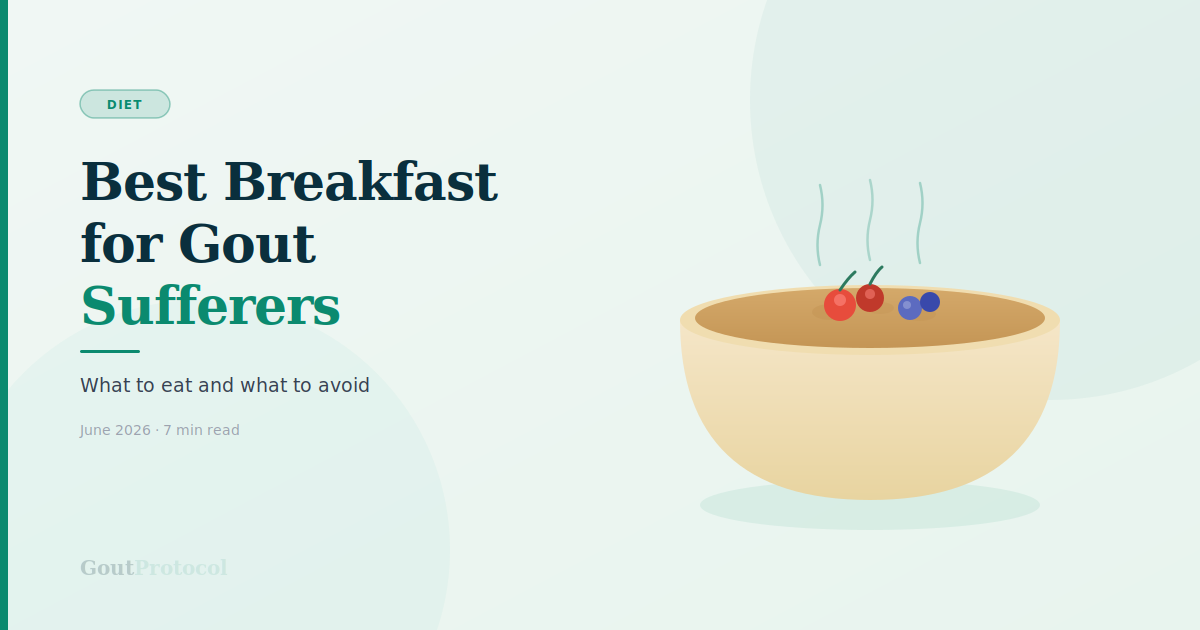
Breakfast is one of the most important meals to get right when you have gout — and one of the most misunderstood. Most people know to avoid red meat and seafood, but the morning meal is where hidden uric acid triggers quietly build up over time.
In this guide, we’ll cover exactly what to eat for breakfast to keep uric acid levels in check, which common breakfast foods are quietly making things worse, and why the usual advice about “healthy” breakfasts can actually backfire for gout sufferers.
Why Breakfast Matters More Than You Think for Gout
Most gout flares don’t happen because of one big meal — they happen because of a slow, steady build-up of uric acid over days and weeks. Breakfast plays a bigger role in that build-up than most people realise, for two main reasons.
First, many popular breakfast foods are surprisingly high in fructose — the sugar that raises uric acid more than any other dietary factor. A glass of orange juice, a bowl of granola, a flavoured yoghurt — these can all spike uric acid before 9am.
Second, morning is when your body is coming off a period of mild dehydration (sleep), which means uric acid is naturally more concentrated in your blood first thing. What you eat and drink in the morning can either help flush it out or make things worse.
The Best Breakfast Foods for Gout
1. Porridge (Oats) with Skimmed or Semi-Skimmed Milk
Porridge is close to the ideal gout breakfast. Oats are low in purines, have a low glycaemic index (meaning they don’t spike blood sugar), and are filling enough to keep you satisfied until lunch. Skimmed and semi-skimmed milk are particularly beneficial — dairy proteins have been shown to actively help the kidneys excrete uric acid, reducing serum urate levels by up to 10% in clinical studies.
Add a small handful of fresh or frozen cherries if you can. Tart cherry has solid evidence behind it for gout — more on that below.
2. Eggs on Wholegrain Toast
Eggs are extremely low in purines and an excellent source of protein. Two eggs on wholegrain toast with a small amount of butter is a gout-friendly, filling breakfast that won’t move your uric acid needle at all. Avoid processed meat accompaniments — bacon and sausage are high in purines and should be kept occasional rather than daily.
3. Greek Yoghurt with Low-Fructose Fruit
Plain Greek yoghurt is another dairy win for gout. The key word is plain — flavoured yoghurts often contain significant added sugar or high-fructose corn syrup. Top it with cherries, blueberries, or strawberries rather than high-fructose fruits like mango, grapes, or banana.
4. Wholegrain Cereal (No Added Sugar)
A bowl of unsweetened wholegrain cereal with milk hits the same notes as porridge — low purines, decent fibre, and the uric acid benefits of dairy. Check the label carefully: many cereals marketed as “healthy” contain 8–12g of sugar per serving, often from fructose-based syrups.
5. Smoothies (Made Carefully)
A smoothie can be either gout-friendly or a fructose bomb, depending on what goes in it. Stick to: skimmed milk or unsweetened almond milk as the base, a handful of cherries or blueberries, a tablespoon of ground flaxseed, and optionally a small amount of ginger. Avoid fruit juice, mango, pineapple, and sweetened protein powders.
🍒 Why Tart Cherry Deserves a Place at Breakfast
Tart cherry is one of the few supplements with genuine clinical backing for gout. A 2025 randomised controlled trial published in the Journal of Dietary Supplements found that 480mg of tart cherry extract twice daily reduced gout flare frequency and lowered serum uric acid over 12 weeks. Adding a small handful of frozen tart cherries to your morning porridge or smoothie is an easy, food-first way to get a meaningful dose.
Breakfast Foods to Avoid If You Have Gout
| Food | Why It’s a Problem | Better Alternative |
|---|---|---|
| Orange juice / fruit juice | High fructose — raises uric acid rapidly | Water with lemon, or skimmed milk |
| Sugary cereals | Often contain fructose corn syrup | Plain oats or unsweetened wholegrain cereal |
| Bacon and sausages | High in purines | Eggs, smoked salmon (occasional) |
| Flavoured yoghurt | Added fructose and sugar | Plain Greek yoghurt with fresh fruit |
| Granola | Often high in honey/syrup (fructose) | Plain oats with berries |
| Shop-bought smoothies | Typically very high in fructose | Make your own with low-fructose fruit |
| White bread / pastries | Spike blood sugar, correlating with uric acid spikes | Wholegrain bread or oats |
The Fructose Problem Nobody Talks About
Fructose is the single most important dietary driver of high uric acid — more than red meat, more than beer, and more than seafood. This is because fructose metabolism in the liver directly produces uric acid as a byproduct, independent of purine content.
The problem at breakfast is that fructose hides in things most people think of as healthy. A 250ml glass of orange juice contains around 12g of fructose — roughly the same as a can of Coke. “Natural” doesn’t mean safe for uric acid.
The safest fruits for gout at breakfast are cherries, blueberries, and strawberries. The highest-fructose fruits to limit include mango, grapes, watermelon, and apple juice.
What to Drink at Breakfast
- Water — aim for a full glass before you eat anything. Overnight dehydration concentrates uric acid; hydrating first thing helps dilute it.
- Skimmed or semi-skimmed milk — dairy actively supports uric acid excretion.
- Black coffee — moderate consumption (1–2 cups) has been consistently associated with lower uric acid levels in population studies.
- Green tea — anti-inflammatory and a good source of antioxidants.
Want the Complete Gout Diet Plan?
The Modern Gout Guide includes a full 7-day meal plan, 100+ foods rated for gout safety, 14 recipes, and the complete evidence-based supplement stack — all in one PDF.
Get The Guide — £17.99 →A Sample Gout-Friendly Breakfast Week
- Monday: Porridge with skimmed milk, frozen cherries, and ground flaxseed
- Tuesday: Two scrambled eggs on wholegrain toast with half an avocado
- Wednesday: Plain Greek yoghurt with blueberries and walnuts
- Thursday: Unsweetened bran flakes with semi-skimmed milk and strawberries
- Friday: Cherry and blueberry smoothie with unsweetened almond milk and flaxseed
- Saturday: Poached eggs on wholegrain toast with grilled tomatoes
- Sunday: Overnight oats with skimmed milk, chia seeds, and cherries
Frequently Asked Questions
Is porridge good for gout?
Yes — porridge is one of the best breakfast choices for gout sufferers. Oats are low in purines, have a low glycaemic index, and when made with skimmed or semi-skimmed milk, provide the uric acid-lowering benefits of dairy. Avoid sweetening with honey or syrup, both of which are high in fructose.
Can I drink orange juice if I have gout?
Orange juice is best avoided if you have gout. Despite being a natural product, it’s high in fructose — the sugar that raises uric acid most directly. A 250ml glass contains around 12g of fructose. Water, black coffee, or milk are better morning drink choices.
Are eggs bad for gout?
No — eggs are very low in purines and are an excellent breakfast protein for gout sufferers. They can be eaten daily without affecting uric acid levels. The issue at a cooked breakfast is the accompaniments — bacon and sausages are high in purines and should be kept occasional.
What fruit can I eat at breakfast if I have gout?
The best fruits for gout at breakfast are cherries (particularly tart cherries), blueberries, and strawberries — all relatively low in fructose and rich in anti-inflammatory compounds. Avoid or limit high-fructose fruits like mango, grapes, watermelon, and apple juice.
Is coffee okay for gout?
Yes — moderate coffee consumption (1–3 cups per day) has been consistently associated with lower uric acid levels in population studies. Black coffee or coffee with a small amount of milk is fine. Avoid sugary coffee drinks or those made with flavoured syrups.
How much water should I drink in the morning if I have gout?
Aim to drink at least one full glass (250–300ml) of water before eating breakfast. Overnight you become mildly dehydrated, which concentrates uric acid in the blood. Rehydrating first thing helps dilute uric acid and supports kidney excretion. Aim for 2–3 litres total throughout the day.
Sources
- Dalbeth N, et al. Gout. Lancet Rheumatology. 2024.
- Kakutani-Hatayama M, et al. Tart cherry and uric acid. Journal of Dietary Supplements. 2025.
- Choi HK, et al. Fructose and uric acid. NEJM. 2010.
- Dalbeth N, et al. Dairy intake and uric acid. Annals of the Rheumatic Diseases. 2023.
- Harvard Health Publishing. Gout diet: What’s allowed, what’s not. 2026.